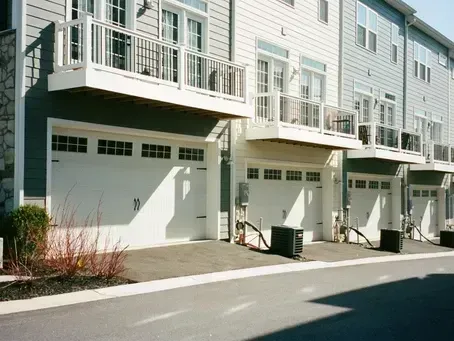
Oftentimes the phrase “condominium association” is used interchangeably with townhome association or homeowner association. The phrase “common interest community association” is also frequently used in place of condominium association to further the confusion. While understandable, a condominium association is an entirely separate and distinct form of property than a common interest community association. Taking a closer look at the various types of residential associations should help remove the confusion.
In 1963 the Illinois state legislature enacted the Illinois Condominium Property Act (“Act”) for purposes of creating a statute that would provide more specific guidance and legal structure for condominium associations. Even though the Act has been amended, revised, and updated numerous times since 1963, its core principles remain intact and it continues to serve as the primary piece of legislation for condominium associations throughout Illinois.
To create a condominium association in Illinois, the property owner must record a declaration. This declaration must expressly state that the property is subject to the provisions of the Act. Further, the declaration must contain specific provisions, one of which requires the official name of the association to include the word “condominium” or be followed by the words “a condominium.” Thus, the simplest and easiest way to determine whether your property is a condominium association is to identify its official name on the recorded declaration.
Another relatively easy way to determine if your association is a condominium association is to consider the words used in the declaration. The Act contains certain definitions that are unique to condominium associations and which invariably get incorporated into an association’s governing documents (i.e. Declaration and Bylaws). Condominium association declarations often use the phrase “common elements” and “limited common elements” when describing specific portions of property within the community. These terms are generally reserved for use within condominium association declarations, although they can appear in other declarations as well.
In 2010, the Illinois state legislature enacted the Common Interest Community Association Act (“CICAA”). Known largely as the sister statute to the Condominium Property Act, CICAA was enacted to provide more specific guidance and legal structure for non-condominium associations. The law defines the term “common interest community” as “real estate other than a condominium or cooperative with respect to which any person by virtue of his or other ownership of a partial interest or a unit therein is obligated to pay for the maintenance, improvement, insurance premiums or real estate taxes of common areas described in a declaration which is administered by an association.” A common interest community does not include a master association.
If you live in a residential association in which you pay assessments that contribute towards the maintenance, improvement, insurance premiums or real estate taxes of the common areas within your community AND the word “condominium” or the words “a condominium” do not appear in the name of your association declaration, you most likely are part of a townhome association or a homeowners association. These are commonly known as common interest community associations. Another easy way to determine whether you live in a common interest community association is to review the language used in your association declaration. If you see the word “common area” as opposed to “common element” you likely reside in a common interest community association.
You may be thinking why does any of this matter? Identifying the type of association you live in matters because it determines which Illinois law applies to your community. Understanding which law applies enables association members to educate themselves about their legal rights and responsibilities. Since these differ depending upon which law applies, it is critically important to review the correct law.
While many sections of the Illinois Condominium Property Act, General Not-For-Profit Corporation Act of 1986 and the Common Interest Community Association Act are straightforward and self-explanatory, others are confusing and vague. Without legal training and a deep understanding of applicable case law that interprets these laws, understanding them can be complicated. In the event you do not know which law applies or you encounter sections of applicable law that are confusing, please speak with qualified legal counsel for advice. Doing so will save you time, resources, aggravation, and money.